ServicesTile Roofing
Tile Roofing in Carson, Checked Before the Rains
Clay and concrete tile can outlast the house, but the underlayment beneath it does the waterproofing and wears out first. We replace broken tile, renew underlayment and flashing, and reset your tile so your home is sealed before the wet months arrive.
How a Tile Roof Works and What Fixing It Takes
Every tile roof has two layers doing two jobs. The tile up top turns away most rain and shades the roof from sun. Beneath it, felt or synthetic underlayment picks up any water that slips past and leads it to the eaves. The tile itself seldom gives out. The underlayment does, as year after year of heat bakes the felt brittle until it splits at the overlaps.
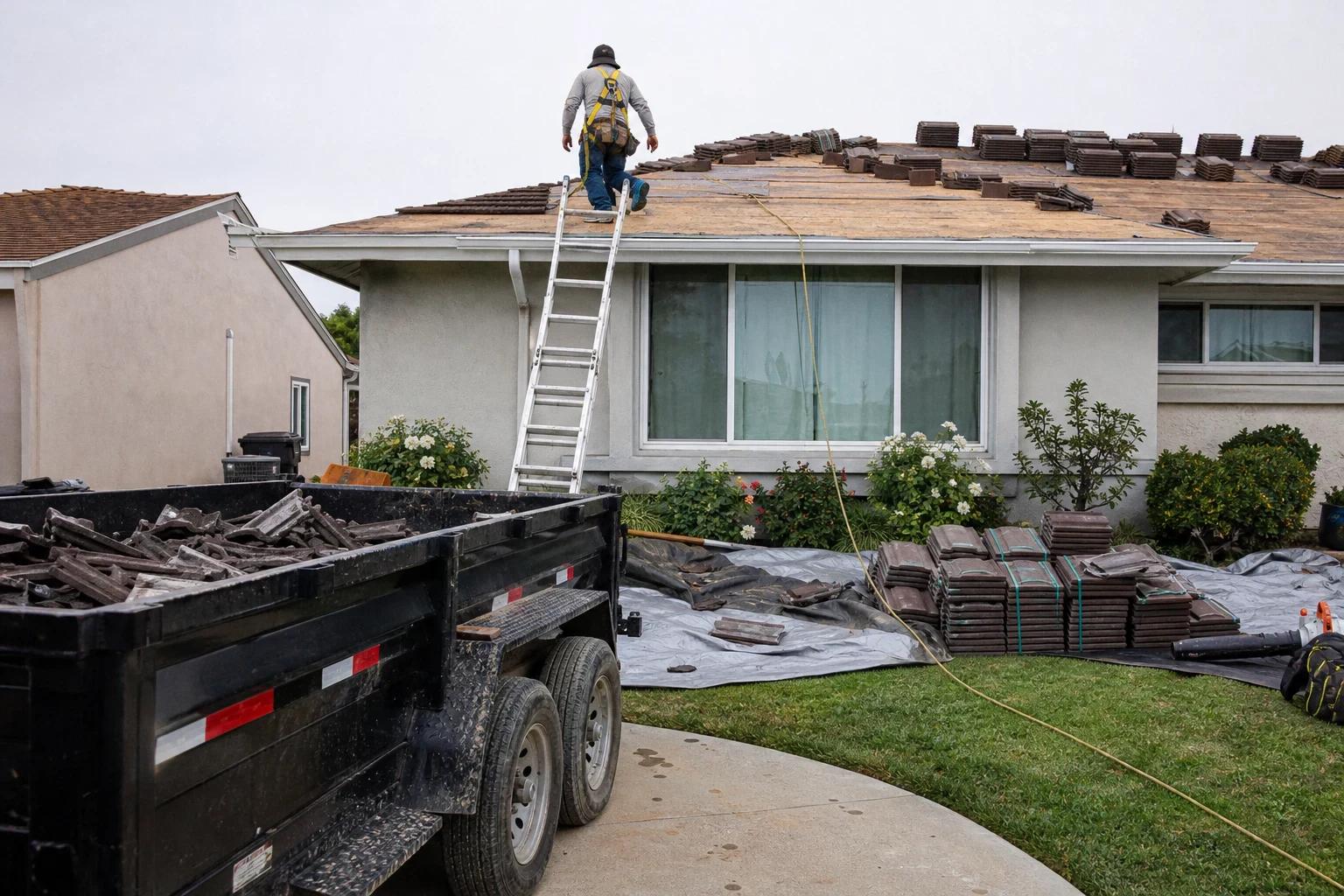
So a tile roof can look flawless from the curb and still let water in. The season's first hard rain slips by a shifted tile, meets cracked felt and reaches the wood. Most of our tile jobs are a lift-and-relay: tile comes off, new underlayment, battens and flashing go down, and your own tile goes back on, with replacements for any broken pieces.
We also do spot repairs on newer tile roofs and install complete new tile roofs. The best stretch for this work is late summer and fall, with the deck dry and the rains still ahead.
What Our Tile Roofing Work Covers
- Cracked and slipped tile
- We replace broken tile and reset pieces that have slid down the batten. A slipped tile leaves an open gap that sends rain straight onto the underlayment.
- Underlayment lift-and-relay
- Tile is removed, stacked on the roof and protected. Old felt comes off, the deck is checked, and new underlayment goes down before the tile is reinstalled.
- Flashing and valley metal
- Valleys, chimney and wall flashing, and pipe jacks are where tile roofs leak most. We replace rusted or undersized metal so water has a clear path off the roof.
- Ridge and hip caps
- Old mortar at the ridge cracks and lets caps loosen. We reset or replace caps and secure them so they stay put in fall winds.
- Eave closures and bird stops
- The open ends of curved tile at the eaves invite nesting birds and wind-driven rain. Bird stops close those openings without blocking ventilation.
- Matching your profile
- Some older concrete tile profiles are no longer made. We look for the closest current match or salvaged tile so repairs blend in.
Signs Your Tile Roof Needs Attention
Broken tile you can see from the yard
Cracks often come from foot traffic by satellite or solar installers. One broken tile is a small fix if it is caught before the rains.
Gaps where tiles have slid
A row that looks uneven usually means a fastener or batten has failed. The underlayment below is now taking direct sun and water.
Ceiling stains after the first storm
A stain that shows up after the season's first real rain often points to worn underlayment rather than the tile itself.
Crumbling ridge mortar
Loose mortar and wobbly caps at the ridge or hips let water in at the highest point of the roof.
Debris packed in the valleys
Leaves and dirt dam the valley metal, and water backs up under the tile edges.
How a Tile Job Runs From Inspection to Cleanup
- 1
Inspection with photos
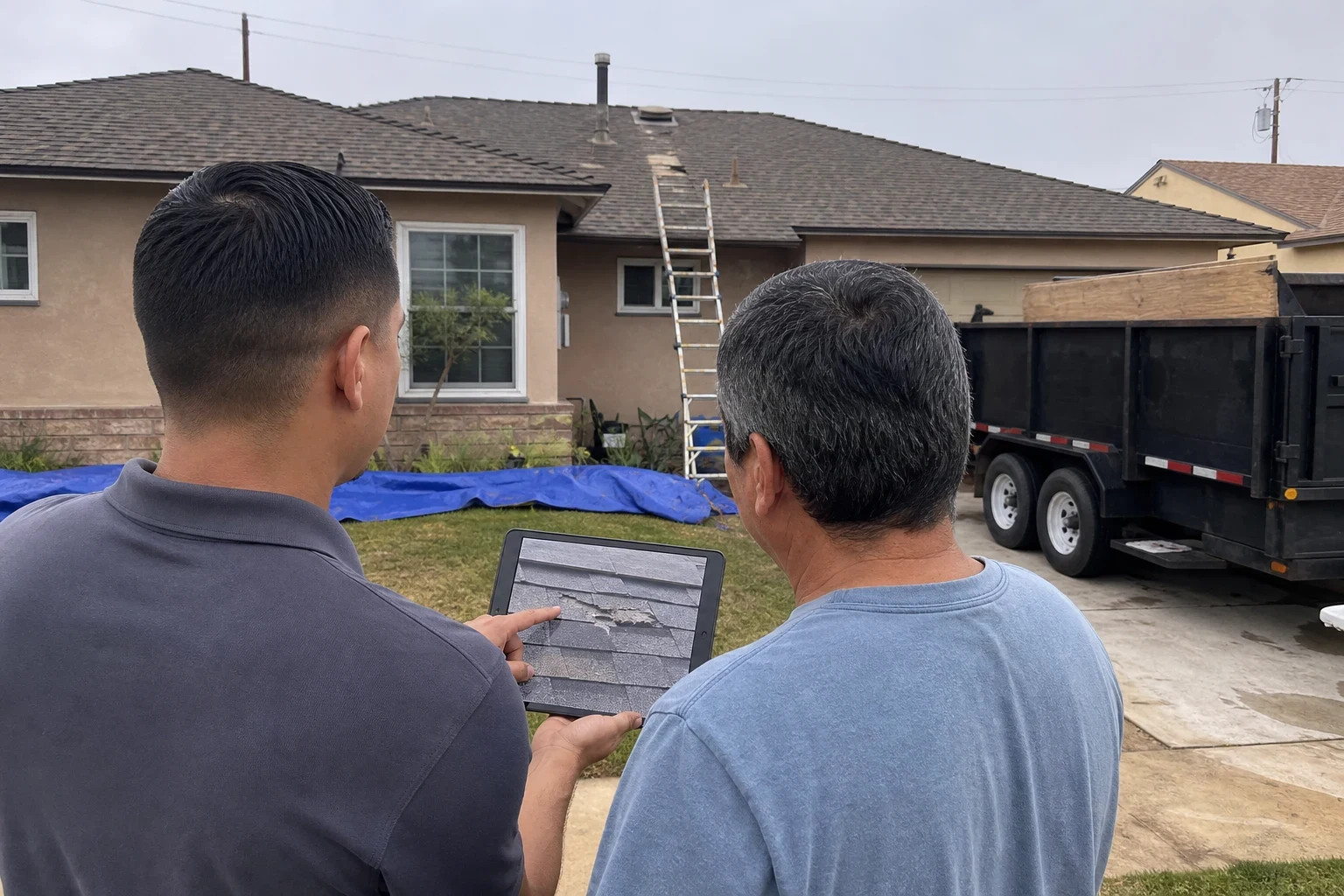
We walk the roof stepping only where tile overlaps, which keeps us from cracking what is sound. You get photos of broken tile, flashing and any underlayment we can see at the edges.
- 2
Free written estimate
We explain whether spot repair will hold or the underlayment needs replacing, and why. The estimate lists tile, underlayment, flashing and any replacement tile separately.
- 3
Scheduling for dry weather
We plan relay work for a dry stretch so the deck is never left open to rain. We pull the permit when the scope calls for one.
- 4
The work days
Tile is lifted and stacked, old underlayment is torn off, the deck is checked and repaired, and new underlayment, battens and flashing go on. Your tile goes back in its courses.
- 5
Cleanup and walk-through
We clear broken tile, felt scraps and nails from your yard and gutters, then show you the finished roof.
What Drives the Cost of a Tile Job
Tile work swings in price more than most roofing, since what lies beneath the tile counts as much as the tile. After the inspection you get a free written estimate with every item on its own line. Financing is available through Service Finance Company, subject to credit approval.
- Spot repair, relay or a new roof
- Swapping a handful of broken tiles is quick. Lifting and relaying the whole roof, or putting on new tile, takes much more labor and material.
- Clay or concrete, and finding a match
- Clay runs higher than concrete, and profiles no longer made take more hunting to match.
- The wood underneath
- If the sheathing under the old underlayment has rotted, it gets replaced before anything new is laid.
- Slope, height and features
- Steep pitches, second stories, chimneys, skylights and solar panels each add hours and flashing.
Common Questions About Tile Roofs
Something not covered here? (310) 896-4936
Will you put my old tiles back on?
In most cases, yes. Sound clay and concrete tile goes back on once the new underlayment is down. A few pieces always break as they come off, and we swap those for matching tile.
A few tiles are cracked. Does the whole roof have to go?
Often not. When the flashing holds and the underlayment still bends without cracking, swapping the broken tile is all it needs. The photos show you which case your roof falls into, and we explain it.
What time of year suits tile work best?
Late summer into fall. During a relay the deck sits open for a while, so dry weather matters, and wrapping up before winter means fresh underlayment is already working when the first storm hits.
Do you deal with insurance companies?
Yes. We work directly with your insurance claim, photographing the damage and explaining our findings. Whether it is covered is up to the adjuster.
Get Your Tile Roof Sealed Before the Wet Season
We will check the tile, flashing and underlayment edges, then explain what needs work and what can wait. You get a written estimate either way.