ServicesCommercial Roofing
Commercial Roofing in Carson
We inspect, repair and replace roofs on shops, offices, warehouses and small multi-unit buildings, most of them low-slope. We find the seams, drains and flashings that will fail when the rain returns, then fix them while the weather is dry and the work is easy to schedule.
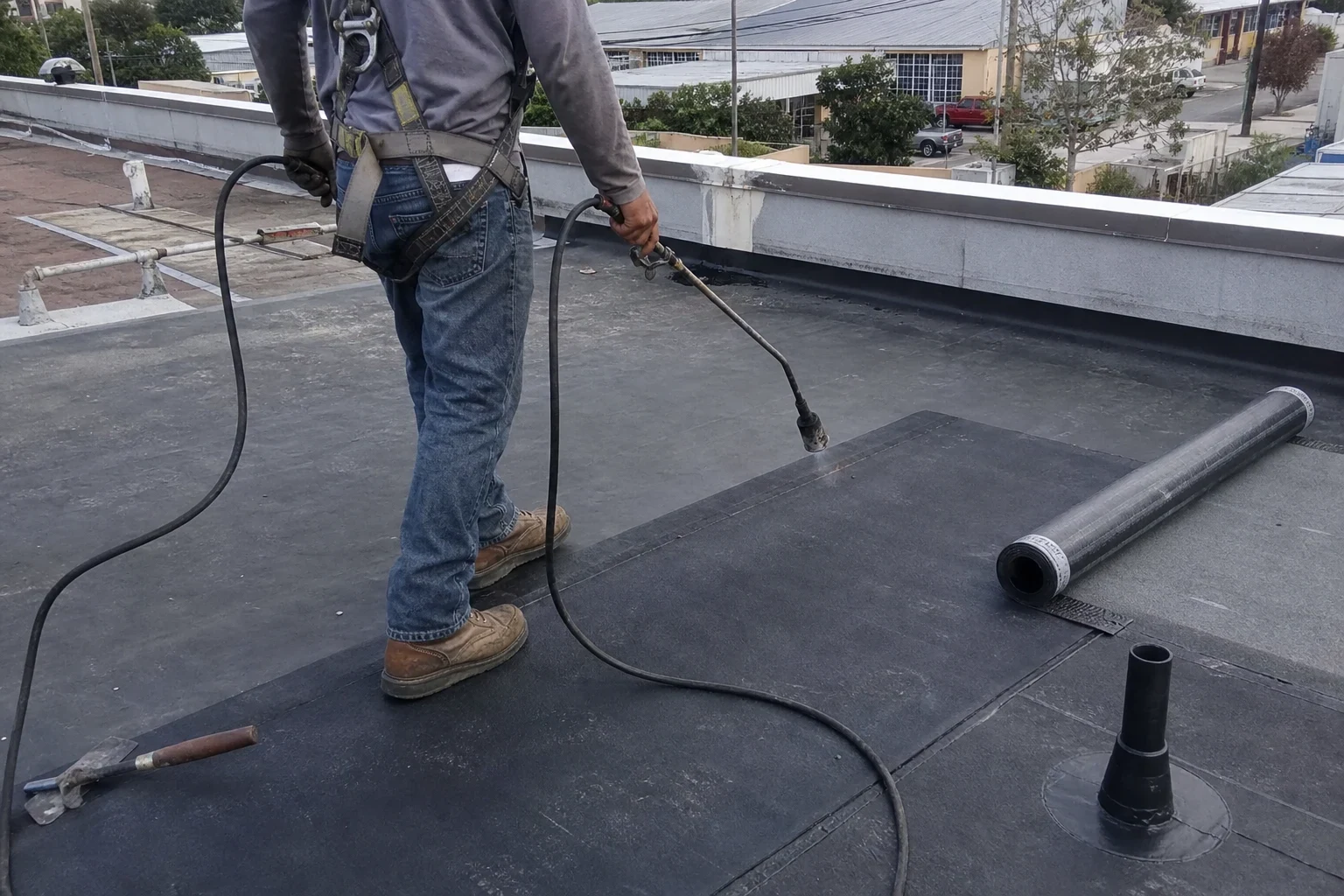
What Commercial Roofing Covers on a Low-Slope Building
Most commercial roofs are nearly flat. They are covered with built-up roofing, modified bitumen, a single-ply membrane like TPO, or an older system with a coating on top. None of these shed water the way a pitched shingle roof does. They depend on continuous seams, clear drains and tight flashing at every curb, pipe and parapet.
Sun does most of the slow damage. Months of UV dry out asphalt cap sheets until they crack, shrink single-ply membranes at the edges and chalk the surface of coatings. You rarely see it from the parking lot. The first sign is usually a stained ceiling tile after the first real storm of winter.
That is why we plan commercial work around the calendar. In Carson the dry months give us long, predictable work days, so we inspect in summer and early fall, repair what we find, and leave your building ready before the rainy season starts. If your building is a smaller flat-roofed structure, our Flat Roofing page covers that work in more detail.
What the Work Includes
- Membrane and seam repair
- We reweld or reseal open TPO seams, patch split modified bitumen and cut out blisters on built-up roofs. Each repair is made with a material compatible with the existing system, because mismatched patches peel within a season.
- Drains, scuppers and gutters
- Clogged drains are the most common cause of ponding. We clear strainers, reset drain clamping rings, open scuppers and check that downspouts carry water away from the foundation. Gutter work on mansard edges is covered on our Gutters page.
- Flashing at curbs and parapets
- HVAC curbs, vent stacks, skylights and parapet walls are where most commercial leaks start. We rebuild base flashing, replace failed pitch pockets and reseal or replace coping caps that let water into the wall.
- Roof coatings
- When the membrane underneath is still dry and sound, a reflective elastomeric or silicone coating can add years and cut heat gain on the top floor. We only recommend it after we have confirmed the insulation is not wet.
- Tear-off and replacement
- When the roof has two layers already, wet insulation or a deck that flexes underfoot, we remove it down to the deck, repair the substrate, and install a new system with tapered insulation where the slope needs help.
Warning Signs on a Commercial Roof
Ponding that lasts two days
Water still sitting 48 hours after rain points to blocked drains, a sagging deck or crushed insulation. Standing water wears out membranes faster and puts weight on a structure that wasn't built to carry it.
Cracking across the surface
A network of cracks on built-up or bitumen roofing shows the asphalt has dried out in the sun. Water runs down those cracks into the felts.
Loose edges and open seams
As single-ply membranes age, they shrink and pull back at the perimeter and seams. Wind can catch a loose edge and peel up a bigger section.
Stains on ceiling tiles
Water often runs along the deck before dripping, so a stain can be far from the actual opening. We trace it on the roof instead of patching over the stain.
Spongy spots on the roof
If the roof feels soft when you walk it, the insulation is usually wet. That changes what the repair involves, and it's good to know before the winter rains add more water.
What Moves the Cost of Commercial Roof Work
Two buildings with the same square footage can price very differently. What matters most is the system on the roof, what condition it is in underneath, and how hard it is to get material up there. Your written estimate breaks these out so you can see where the money goes.
Size and access
Larger roofs cost more overall, but access matters too. A roof reachable only by interior hatch, or one over a busy storefront, takes more labor to stage and protect.
Existing layers and moisture
A roof with wet insulation or multiple layers needs a full tear-off. Dry, single-layer roofs can often be repaired or coated instead.
Deck condition
Rusted metal deck, rotted wood or cracked lightweight concrete has to be repaired before anything new goes on. We can only confirm this once we see the layers.
Rooftop equipment
Every HVAC unit, vent, skylight and conduit run needs its own flashing. A roof crowded with equipment takes more detail work than an open one.
Permits and timing
Replacement typically needs a city permit and inspection, which we pull. Booking in the dry months also avoids paying for temporary dry-in work during rain.
Steps in a Commercial Roof Project
- 1
Free on-roof inspection
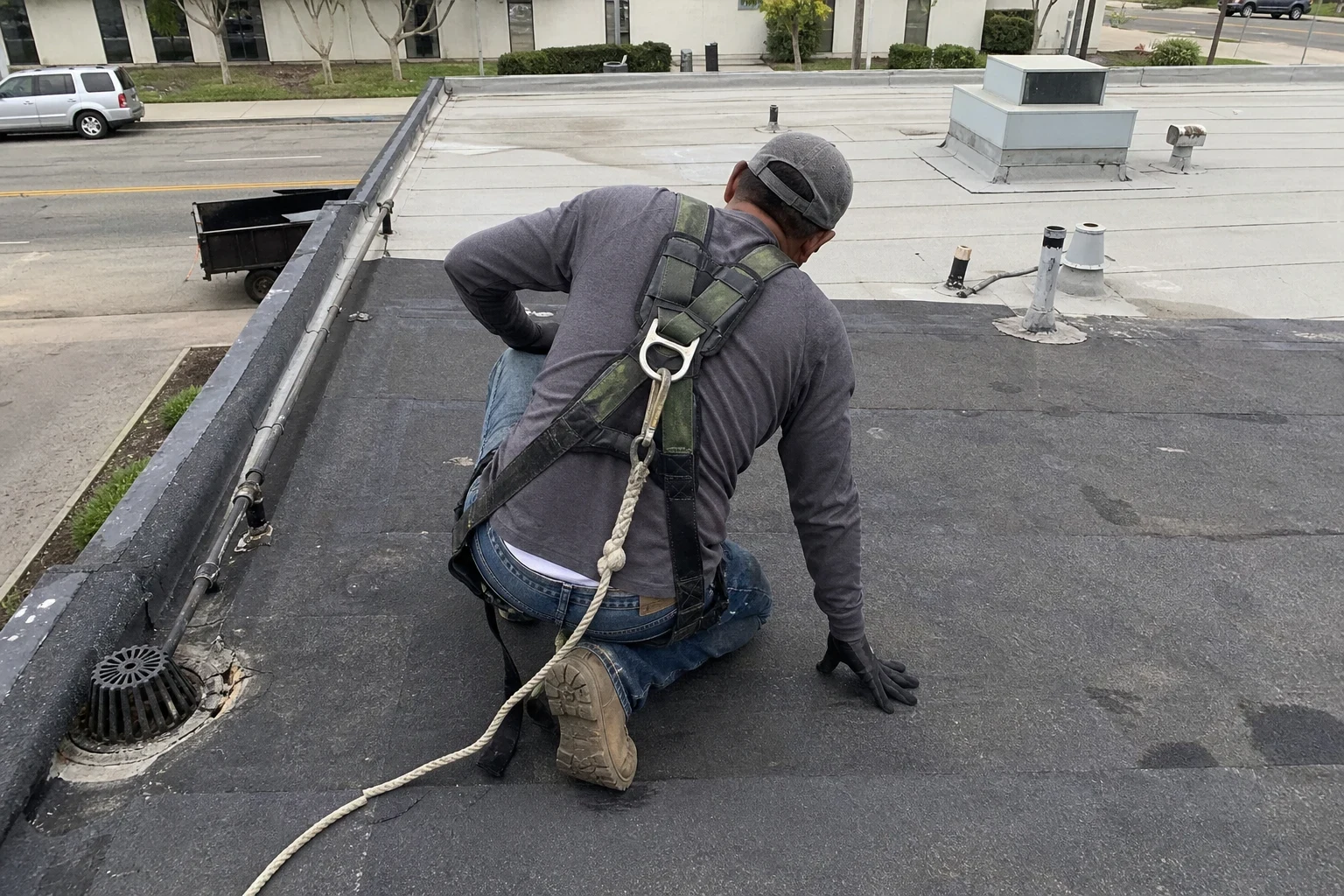
We cover the entire roof, check each drain and penetration and look inside wherever you've seen stains. If we suspect moisture, we may cut a small core sample to see the layers and insulation, sealing it before we leave.
- 2
Photos and an itemized estimate
We give you photos of our findings and a free written estimate with each repair on its own line. When coating, repair and replacement are all sensible, we lay out the trade-offs of each.
- 3
Working around your operations
Loud work, material drop-offs and any tear-off are planned around your hours, tenants and parking. Scheduling in the dry season leaves room to choose the least disruptive days.
- 4
Water test and final walk
After the work, we flood-test drains where we can, walk the roof with you or your manager and clean up debris on the roof and around the building.
Questions From Building Owners
Can we stay open during the work?
Usually, yes. Repairs and coatings are quiet enough that customers rarely notice. On a tear-off, we schedule staging, deliveries and the loudest work around your hours and keep your entrances open.
Is a coating enough, or do I need a new roof?
Coating is an option when the membrane is intact and the insulation below is dry. If core samples show wet insulation, or there are already two layers, a coating only seals the problem in. After the inspection we tell you which case you're in.
Do you handle insurance claims for commercial properties?
Yes, we work directly with your insurance claim. We record the damage in photos and measurements and can meet the adjuster on the roof. Coverage is the adjuster's decision; our job is to make the damage plain to see.
Can I finance the work?
Financing is offered through Service Finance Company, subject to credit approval. We can go over it while reviewing your written estimate.
When should I book commercial roof work?
Between late spring and early fall. Membranes and adhesives go down best in warm, dry weather, and repairs done then are ready before the first winter storm puts them to the test.
Get Your Building's Roof Ready Before the Rains
We will walk the roof, check every drain and seam, and give you photos with a free written estimate. Scheduling in the dry months leaves time to fix what we find on your terms.