ServicesFlat Roofing
Flat Roofing in Carson
A flat roof fails where water sits. We repair and replace low-slope roofs over additions, garages and patio covers with modified bitumen, TPO or coatings. We also correct the drainage that caused the trouble, so the roof is ready when the winter rains arrive.
What Flat Roofing Covers and When It Fits
Most flat roofs on homes are not truly flat. They are low-slope sections, usually a quarter inch of fall per foot or less, over a family room addition, a carport, a garage or a patio cover. Shingles cannot go on a pitch that shallow because water backs up under the laps. These sections need a membrane that sheds water as one continuous sheet.
Our sun does most of the damage over the dry months. UV dries out asphalt cap sheets, opens seams and cracks the mastic around vents and drains. Then the first heavy winter storm finds every weak point at once. We prefer to look at a flat roof in late summer or early fall, while there is time to repair it on a dry day instead of in a downpour.
If your home also has a pitched roof, we can look at both on the same visit. Shingle or tile sections are covered on our Asphalt Shingle Roofing and Tile Roofing pages.
What the Work Includes
- Membrane selection
- We install modified bitumen cap sheet, TPO single-ply or a fluid-applied coating over sound existing roofing. We explain which one suits your deck, your budget and how much foot traffic the roof gets.
- Drainage correction
- Ponding water is the main reason flat roofs fail early. We add tapered insulation or crickets where water sits, and we reset scuppers and drains so they sit at the low point instead of above it.
- Deck and edge repair
- Soft plywood or rotted fascia gets replaced before new roofing goes down. We show you photos of what we found.
- Flashing at walls and penetrations
- Where a flat section meets a stucco wall, we run the membrane up the wall and terminate it under a counterflashing. Vent stacks, AC curbs and skylights get new flashing. These joints leak far more often than the open field of the roof.
- Cool-roof surfacing
- California's energy code calls for reflective surfaces on many low-slope reroofs. A white TPO or reflective cap sheet also keeps the room below noticeably cooler in summer.
Signs Your Flat Roof Needs Attention
Water standing two days after rain
Ponding means the roof has sagged or the drains sit too high. Standing water speeds up membrane breakdown and adds weight to the framing.
Blisters and bubbles
Trapped moisture or air under a built-up or modified roof expands in the heat and lifts the layers apart. Blisters split eventually and let water straight in.
Alligatored or chalky surface
A cracked, scaly pattern on asphalt roofing, or bare spots where the granules have worn away, shows years of UV wear. The waterproofing layer is close to exposed.
Open seams and lifted edges
Look at the laps between sheets and at the metal edge. A gap you can slide a card into will take on wind-driven rain.
Stains on the ceiling below
Brown rings under an addition or patio cover usually start at a wall joint or penetration. They are seldom in the middle of the roof.
What Moves the Price of a Flat Roof
Square footage is only the starting point for a flat roof price. The bigger swings come from the old layers, the wood and the drainage hidden below the membrane, which is why we quote only after walking the roof. Your estimate shows each part on its own line. Financing is available through Service Finance Company, subject to credit approval.
Number of existing layers
Older homes sometimes have two or three roofs stacked up. Each layer adds labor and disposal to the tear-off.
Deck condition
Plywood that has soaked through around a drain has to be replaced. We cannot know how much until the old roofing is off, so we price wood per sheet in writing.
Drainage work
Tapered insulation, new crickets or relocated scuppers add material. They are also what keeps the new membrane from ponding.
Membrane system
A coating over a sound roof costs less than a full tear-off. TPO and modified bitumen differ in material and labor, and we compare them on your estimate.
Penetrations and access
Every AC unit, vent and skylight needs its own flashing. A tight side yard can slow material handling.
How a Flat Roof Job Runs
- 1
Free inspection
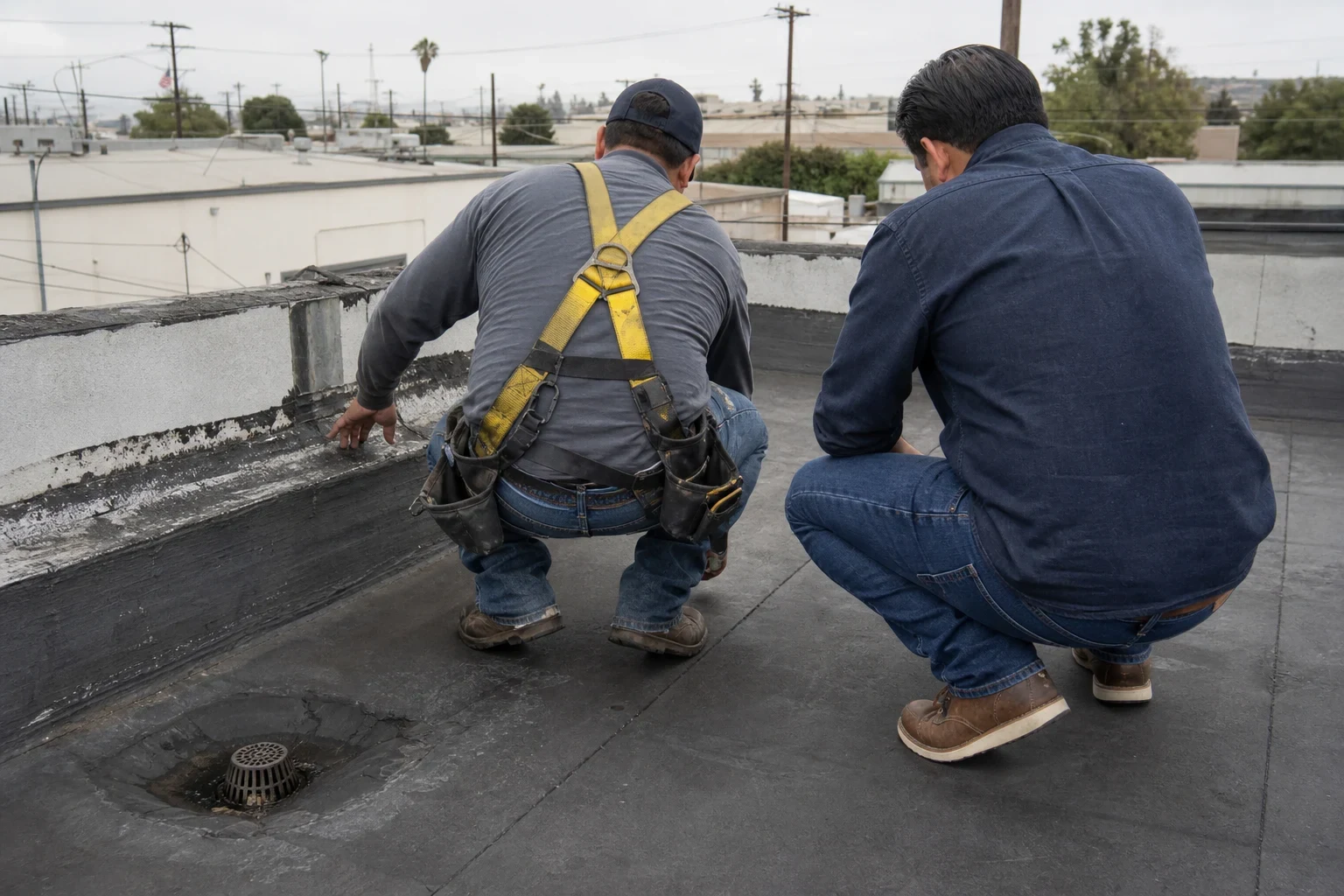
We walk the roof and probe soft spots. We check drain heights against the low points and photograph the seams, flashings and any ponding marks.
- 2
Written estimate
You get a free written estimate that lists tear-off, deck repair, drainage work, membrane type and flashing details as separate lines. If a repair or a coating will carry the roof another few seasons, we tell you so.
- 3
Prep and tear-off
We cover plants and walkways, and we pull the permit where one is required. Then we strip the old roofing down to the deck and replace any damaged wood the same day.
- 4
Install and detail
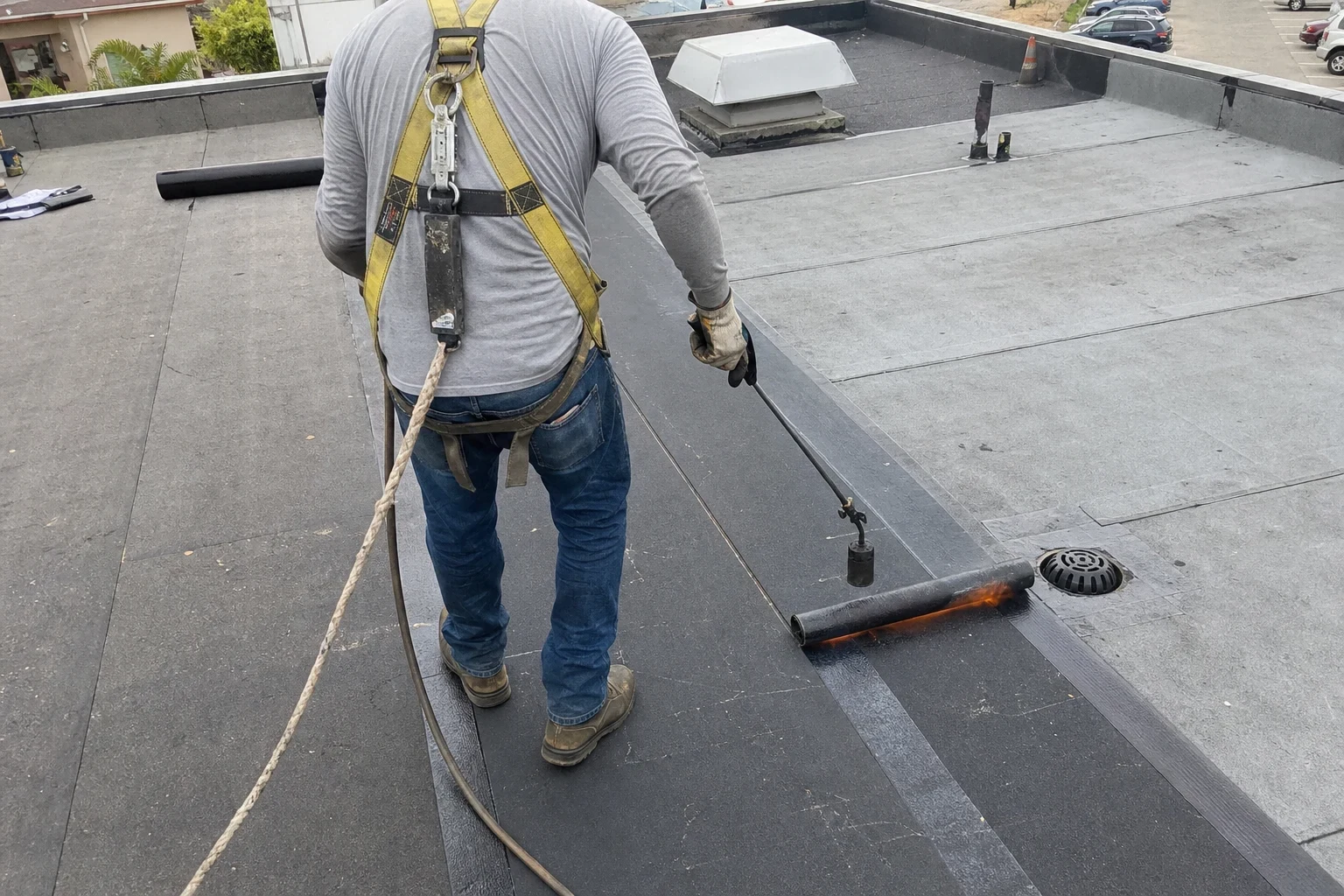
Insulation or tapered board goes down first, then the membrane. Seams are heat-welded or torched and checked by hand, and wall and curb flashings are finished last.
- 5
Water test and cleanup
We run water toward each drain to confirm it flows. Then we sweep the yard for nails and debris.
Flat Roofing Questions
Can you just coat my flat roof instead of replacing it?
Sometimes. A coating works when the existing roof is dry, firmly attached and drains reasonably well. If we find wet insulation or soft decking, a coating would trap that moisture and fail early. We tell you which case you have after the inspection.
Which is better for a house, TPO or modified bitumen?
Both are good choices. TPO is a white, heat-welded single-ply that reflects heat well. Modified bitumen is thicker and holds up better where people walk, such as around AC equipment. The right pick depends on your roof's use and how it ties into the walls.
When is the best time to redo a flat roof?
Late summer through fall is ideal. The deck is dry, membranes bond well in warm weather, and the work is done before the winter storms. Spring is the next best window.
Will my insurance cover a leaking flat roof?
It depends on the cause. Sudden damage is often covered, but wear from age usually is not. We work directly with your insurance claim and provide photos and measurements. Your adjuster makes the coverage decision.
Have Your Flat Roof Checked While It's Still Dry
We'll find where water sits and where the seams are opening, and you'll know what it needs before the rains start. The inspection and written estimate are free.