ServicesStorm Damage Repair
Storm Damage Repair in Carson, Done Before the Next Front Arrives
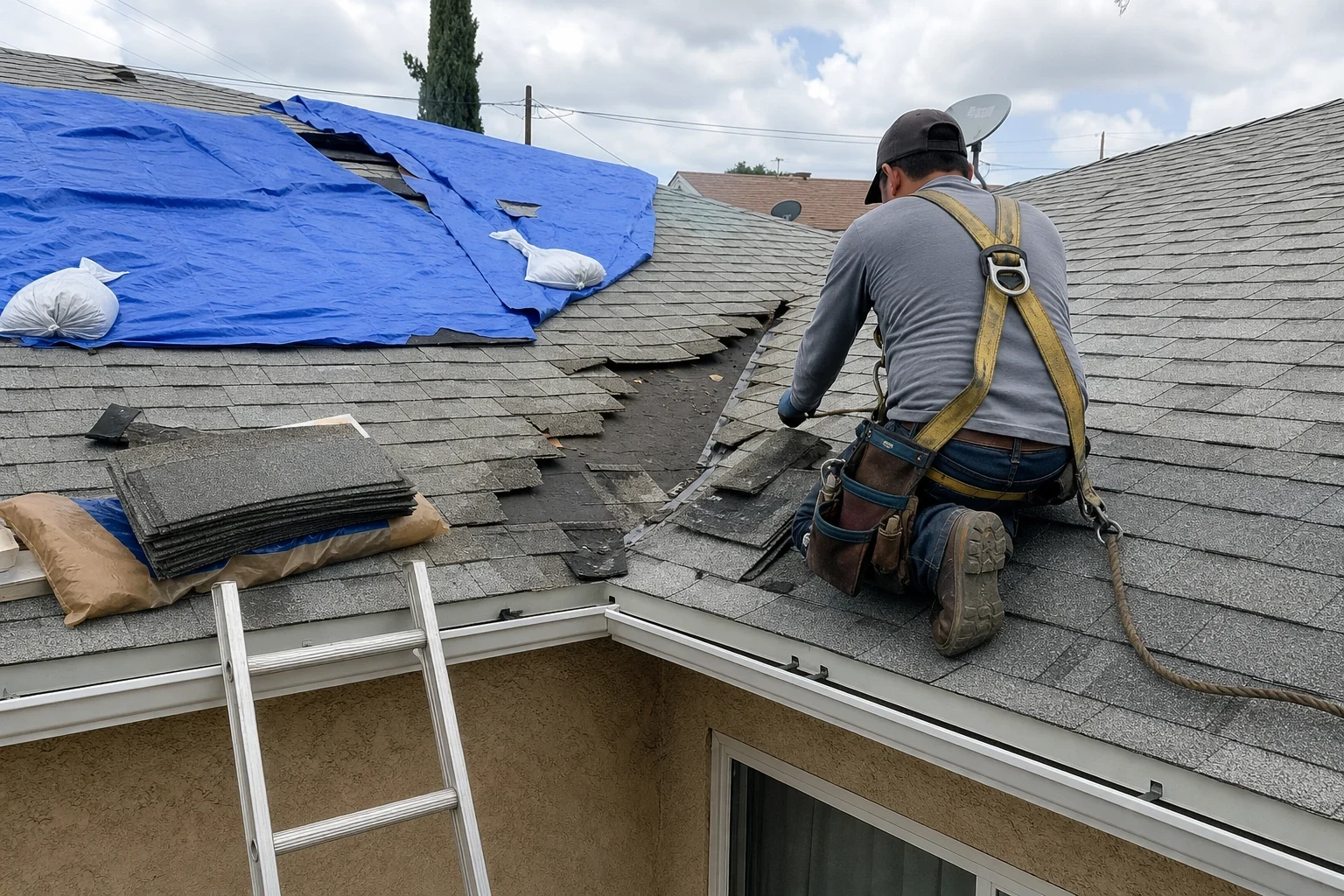
When wind lifts shingles or a branch cracks tile, the damage often stays hidden until the next rain finds it. We inspect your roof, photograph what the storm did, and repair the shingles, flashing and underlayment so your home is sealed before the following storm comes through.
What Storm Damage Repair Covers, and When It's the Right Call
Storms rarely come one at a time. Winter fronts tend to stack up between December and March, and fall Santa Ana winds push on roofs from the northeast, the opposite side from most rain. A shingle whose seal strip broke in an October wind can sit quietly until the first heavy January rain, then let water run under it and onto the roof deck.
Storm damage repair is the right call when a specific event caused specific damage: creased or missing shingles, cracked or shifted tiles, bent drip edge, a ridge cap peeled back. Sometimes the inspection shows shingles that were brittle and worn thin well before the wind arrived. In that case you hear it from us directly, along with why Roof Replacement could be the smarter place to put your money. If water is coming in slowly with no storm behind it, our Roof Leak Repair page is the better fit.
We work directly with your insurance claim. That means clear photos, measurements and a written scope your adjuster can follow. The adjuster decides what the policy covers. Our job is to show what happened and what it takes to fix it correctly.
What the Repair Includes
- Creased and missing shingles
- Once a shingle tab folds back in the wind, the fiberglass mat cracks along the crease line, so resealing it will not hold. We replace creased and missing shingles with the closest available match and hand-seal them so the new tabs bond in cool weather.
- Broken and slipped tile
- Concrete and clay tile shed most of the water, but the underlayment beneath does the actual waterproofing. We replace cracked pieces, reset tiles that slid out of their courses, and look at the underlayment under every disturbed area before closing it back up.
- Flashing, drip edge and pipe boots
- Wind gets under edge metal and bends it, and flying debris can split rubber pipe boots. We refasten or replace step flashing, counter flashing, drip edge and vent boots, because these are the joints where storm water most often gets in.
- Ridge and hip caps
- Caps sit at the highest, most exposed line of the roof and take the strongest gusts. We replace lifted or cracked caps and check the ridge vent beneath them.
- Wet underlayment and soft decking
- If water already reached the deck, we cut out swollen or delaminated plywood and replace torn felt or synthetic underlayment. Covering a wet deck with new shingles only traps the moisture.
- Gutters pulled loose
- Limbs and wind-driven debris can rip hangers out of the fascia. We reattach or replace damaged runs; larger gutter work is covered on our Gutters page.
Signs Your Roof Took Storm Damage
Shingle pieces or granules in the yard
Broken tab corners on the lawn or a pile of granules at the downspout outlet after a windy night mean the roof surface lost material.
A straight line across a shingle tab
From the ground, a crease looks like a faint horizontal line. It marks where the tab bent back and the seal let go.
Tiles out of line
A course of tile that looks wavy, or a gap where you can see dark underlayment, means tiles shifted or broke.
New ceiling stains after rain
A brown ring that appears after the first storm of the season usually points to damage from an earlier wind event.
A limb hit the roof
Even if nothing looks broken, an impact can crack tile or fracture decking. It is worth having checked before the next rain.
Steps in a Storm Repair
- 1
Phone call and free inspection
Let us know what you noticed and when the storm came through. We book a free roof inspection at a time that suits you, in English or Spanish.
- 2
Checking roof and attic, with photos
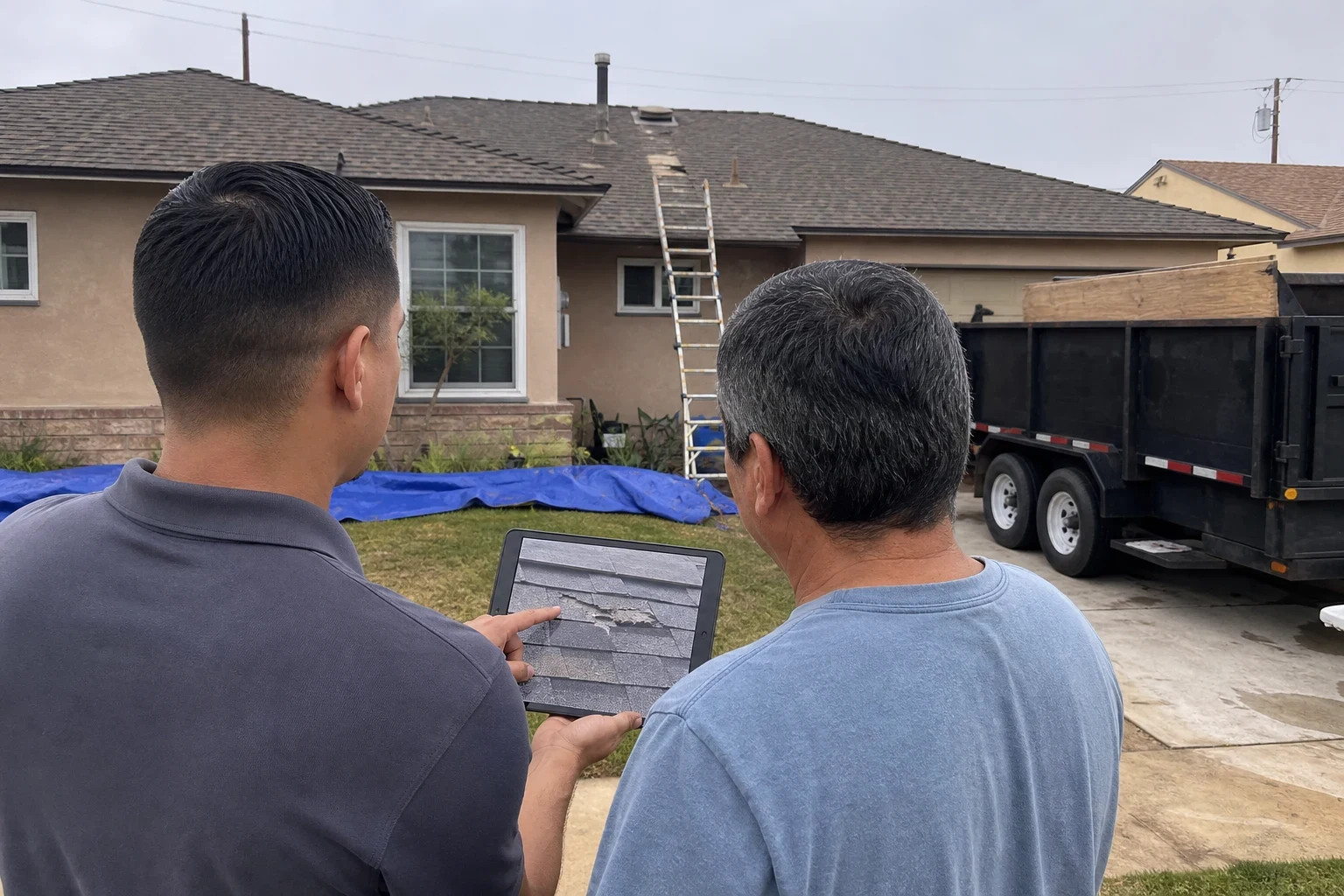
We cover the roof surface, flashing and edges, then look in the attic for damp sheathing or light. Each problem is photographed so you can see it from the ground.
- 3
Estimate and help with the claim
Your free written estimate lists every repair on its own. If you file a claim, we send the photos and scope to your adjuster and walk them through what we found.
- 4
The repair
Plants are covered and tarps laid under the work area. We take off damaged material, fix the deck and underlayment as needed and put on new roofing. A magnet sweep collects loose nails before we go.
- 5
Last look
We go over the completed repair, take after photos and mention anything else on the roof to keep an eye on before next season.
What Sets the Price of a Storm Repair
Storm repairs that look alike from the street can be priced far apart. Most of the difference comes from what the inspection uncovers below the surface. Financing is available through Service Finance Company, subject to credit approval.
- Type of roofing
- Tile needs more labor per square foot since every piece is lifted and set back by hand, and some older profiles are hard to locate.
- What's under the surface
- Swapping a few shingles is quick. Soaked underlayment or soft decking means more tear-off and carpentry.
- Finding a match
- If your shingle color or tile profile is discontinued, we may need to search salvage stock or redo a larger area so the roof looks even.
- Slope and reach
- Steep pitches, two-story eaves and narrow side yards take more safety setup and more time.
- The adjuster's scope
- When a claim is approved, the adjuster's scope sets what the policy pays. We point out any gap between that scope and what your roof actually needs.
Questions After a Storm
Something not covered here? (310) 896-4936
Do I call my insurer first, or get the inspection first?
A lot of homeowners start with the inspection. Our photos and written findings show whether the storm caused the damage and how far it goes, which helps you decide if filing is worth it. If you do file, we work directly with your claim and can meet the adjuster on the roof.
Will the repair match my current shingles or tile?
In most cases, exactly or nearly so. We bring samples and hold them against your roof in daylight. Sun fades shingles, so a fresh patch may look a little darker at first and even out over the next few months.
Do a few lost shingles mean I need a new roof?
Only if the roof truly calls for it. A storm repair addresses the damaged area. If we find brittle shingles or underlayment worn out across the roof, we tell you and put both choices in writing.
How quickly should the roof be looked at after a storm?
Aim to have it checked before it rains again, because that is when hidden damage starts leaking. Late summer and early fall are also a good time, so last year's wind damage is repaired before winter storms come.
Should I tarp the roof on my own?
Please don't. Wet shingles and tile are slick, and cracked tile can break under your feet. Set a bucket under any drip and give us a call.
Get Your Roof Sealed Before the Next Storm
We look over the whole roof, photograph every problem and give you a written estimate before any work starts. Se Habla Español.