ServicesRoof Replacement
Roof Replacement in Carson Before the Next Wet Season
When patches stop holding, we replace the whole system: the shingles or tile, plus the underlayment, flashing and vents beneath them. We start with a free inspection, show you what we found, and plan the tear-off for dry weather so your home is never left open.
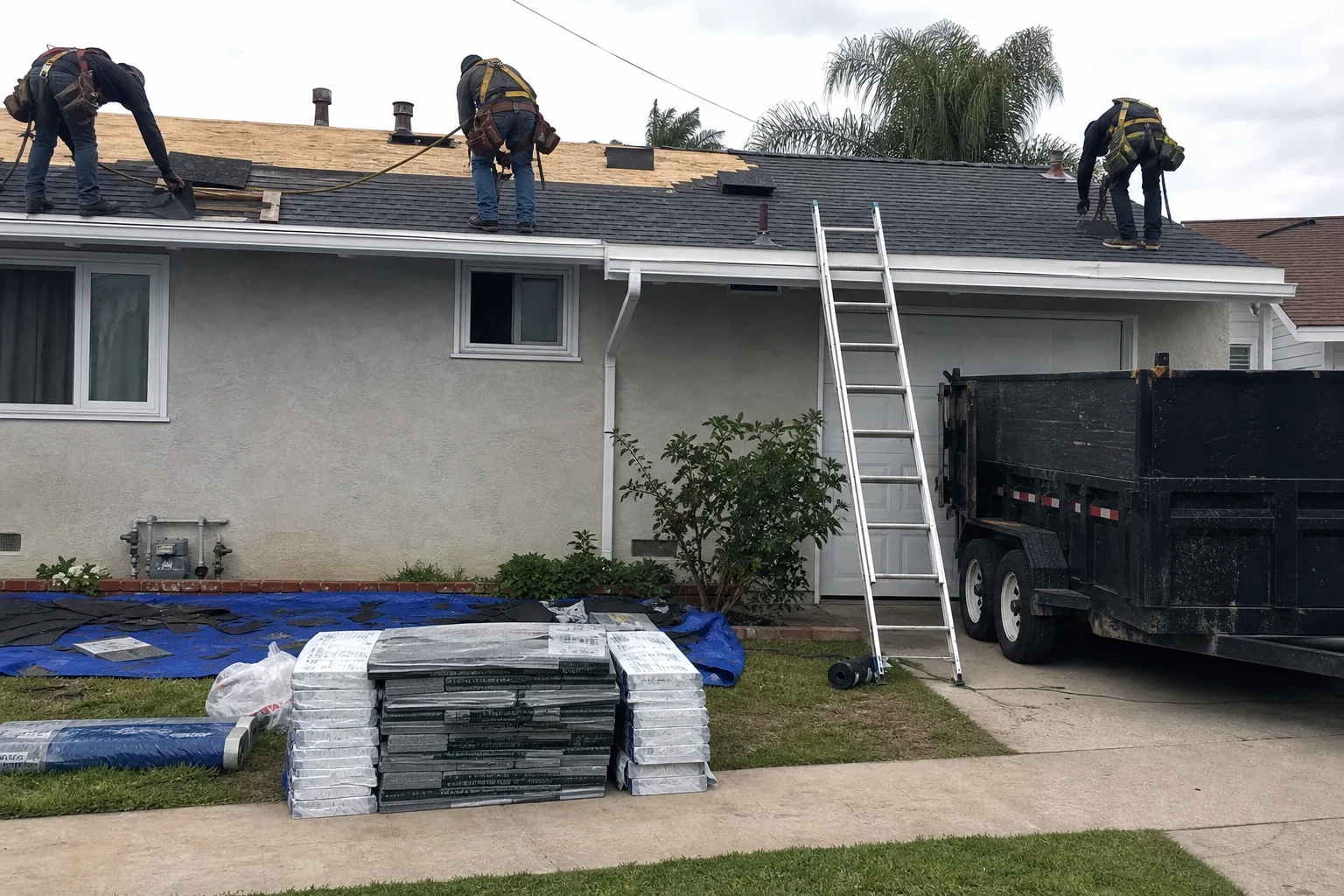
Knowing When It's Time for a New Roof
Roofs wear out as a whole system. Years of UV strip granules from asphalt shingles, the asphalt beneath dries and cracks, and water begins reaching the felt. Tile frequently outlives the underlayment under it, so a tile roof can leak while the tile itself still looks good. When the waterproofing layer is used up across most of the roof, roof repair just pushes the leak to the next weak point.
We tell you honestly where your roof stands. If a targeted fix still has years left in it, we recommend the fix. If the deck, underlayment and flashing have all worn out at once, a new roof costs less in the long run than chasing leaks each winter.
Scheduling counts. Most of our rain arrives between late fall and early spring, so we aim to do tear-offs during the long dry stretch. That keeps an open deck away from storms and leaves you with a finished roof before the first real rain puts it to the test.
Everything That Goes Into a New Roof
- Stripped down to bare sheathing
- Every old layer comes off until we reach the wood. Roofing over existing shingles conceals rot, loads the framing with extra weight and holds heat that ages the new material faster.
- Deck repair and re-nailing
- We walk the bare deck and replace any soft, delaminated or water-stained plywood. Older homes with spaced board sheathing may need solid decking added so new shingles have full support and proper nail holding.
- Underlayment and membranes
- Synthetic underlayment goes over the whole field, with self-adhered membrane in valleys and around chimneys, skylights and pipe penetrations, where water concentrates.
- New flashing, not reused
- Drip edge, step flashing at sidewalls, counterflashing, and new pipe boots. Old flashing is bent from removal and often corroded by salt air, so we replace it.
- Balanced attic ventilation
- We match intake at the eaves with exhaust at the ridge. A vented attic runs cooler in summer and keeps moisture from condensing on the underside of the deck in winter.
- Permit, inspection and cleanup
- We pull the building permit, schedule the city inspection, and finish with a magnetic sweep of the driveway, lawn and planting beds for loose nails.
Signs Your Roof Needs Replacing, Not Patching
Granules in the gutters
Gritty, sand-like piles at the downspouts mean the shingles have lost their UV shield. Bare asphalt ages quickly in our sun.
Curled or cracked shingles
Edges that cup upward or tabs that snap when lifted have lost their flexibility. They no longer seal down, so wind can get under them.
Leaks that move from room to room
A single drip near a chimney or vent usually traces back to flashing. When stains appear in a different room each winter, the underlayment has likely worn out across the whole field.
Soft spots or a sagging line
A deck that gives underfoot, or a ridge that dips between rafters, means water has been reaching the wood for a while.
Slipped tiles over worn felt
If tiles have shifted and the felt beneath is brittle or torn, resetting the tile will not stop water. The underlayment needs replacing, which means lifting the whole field.
What Sets the Cost of a Roof Replacement
A replacement price is built from a handful of things we can measure, and each one appears on your written estimate. Financing is offered through Service Finance Company, subject to credit approval. When storm damage is part of the picture, we work directly with your insurance claim and walk you through each step.
Roof area and slope
Square footage determines how much material we order. Steeper roofs call for roof jacks and harnesses and take more time to work safely.
Roofing material
Asphalt shingle, tile and low-slope flat roofing systems each carry their own material cost, weight and labor time. With some heavier tile, the framing has to be checked first.
State of the decking
Some plywood stays hidden until the old roof comes off. Your estimate spells out how replacement decking is priced, so tear-off day brings no surprises.
Old layers and hauling
Tearing off two or three old layers takes more labor and puts more weight in the dumpster than a single layer does.
Ventilation, flashing and code work
A new ridge vent, more intake at the eaves or current energy code requirements on certain reroofs each add their own line, listed separately.
The Steps of a Roof Replacement
- 1
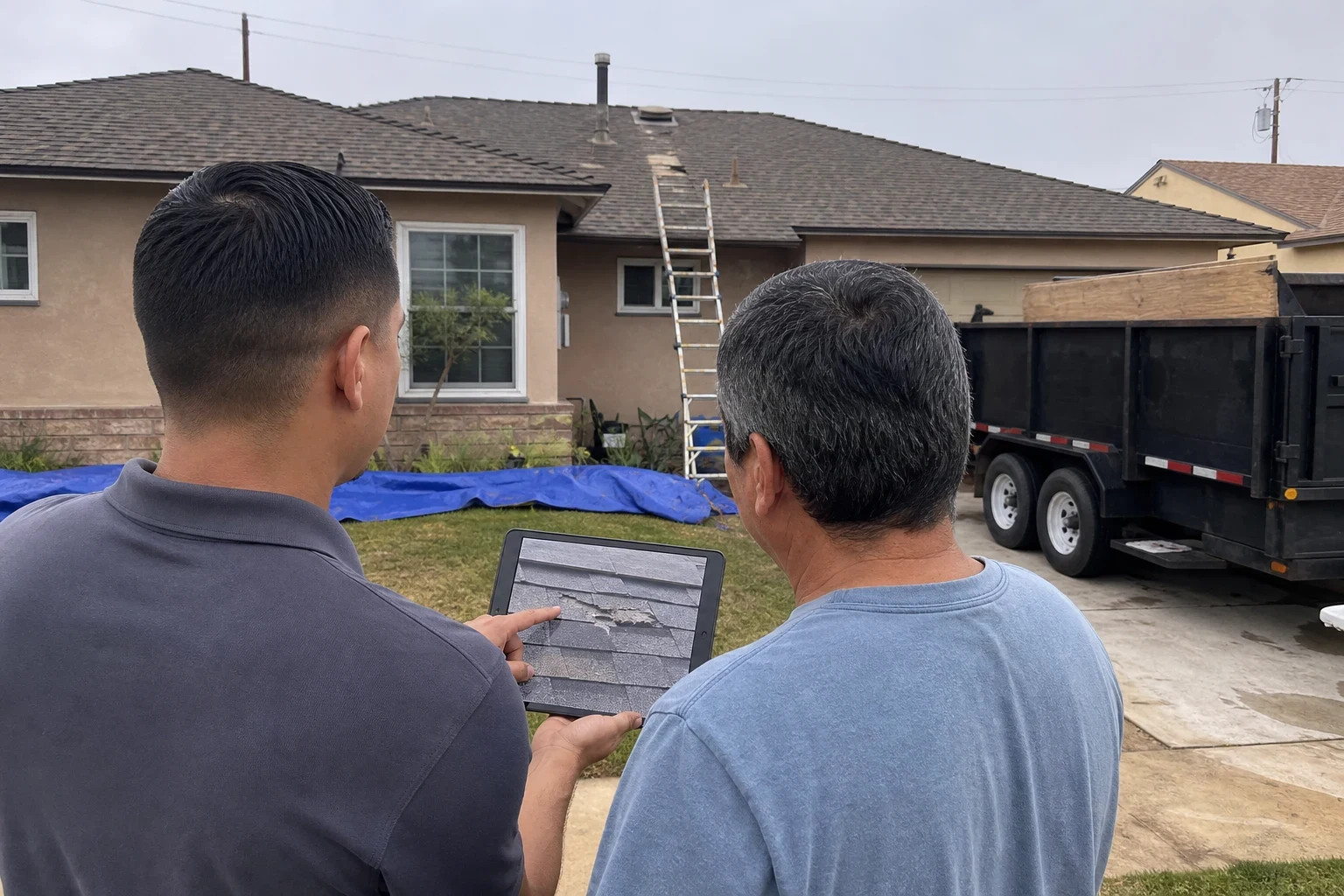
Inspection and a written estimate
We check the roof surface, the attic and the underside of the deck, taking photos as we go. Your free written estimate lists the materials, the deck allowance and any changes to ventilation or flashing.
- 2
Permit and a dry start date
We file for the permit and choose a start date with a clear forecast. If rain is on the way, we move the date rather than open your roof.
- 3
Tear-off and deck repair
Tarps go over landscaping and siding, the old roof comes off and deck repairs happen that same day. Before we leave, anything still open is covered with underlayment.
- 4
Installing the new roof
Underlayment, membranes, flashing, vents and the new roofing are installed in sequence. We wait for the morning marine layer to burn off so adhesive strips and membranes bond to a dry surface.
- 5
City sign-off and walk-through
Once the city inspector signs off, we sweep for nails and walk you through what we replaced, with photos of the deck and flashing work you can't see from the ground.
Questions About Replacing a Roof
How many days does a new roof take?
Once work begins, most single-family asphalt shingle roofs are done in one to three working days. Tile roofs, or homes needing significant deck repair, run longer. The permit beforehand and the city inspection afterward add to the overall timeline.
What time of year should I replace my roof?
Aim for the dry months, roughly late spring through early fall. Warm weather helps shingles seal, and the job is complete before winter storms show up. Scheduling your inspection early in the year leaves the most dates open.
Can new shingles go over the old layer?
We advise against it. An overlay covers up deck rot, puts extra weight on the framing and leaves the old underlayment and flashing in place, and those are usually the parts that failed. Tearing off completely lets us fix the entire system.
Will insurance cover a new roof?
Only when covered damage, such as wind, is the reason it's needed. Age and wear are not covered. We work directly with your insurance claim, photograph what we find and walk you through the process, but the adjuster decides coverage.
Is financing an option?
Yes. Service Finance Company offers financing, subject to credit approval. We can talk about it while reviewing your estimate.
Get Your New Roof Planned Before Winter
We will inspect your roof, tell you plainly whether it needs replacing, and give you a written estimate you can keep. Dry-season dates fill first.