ServicesGutters
Gutters in Carson Sized and Pitched for the Rain Ahead
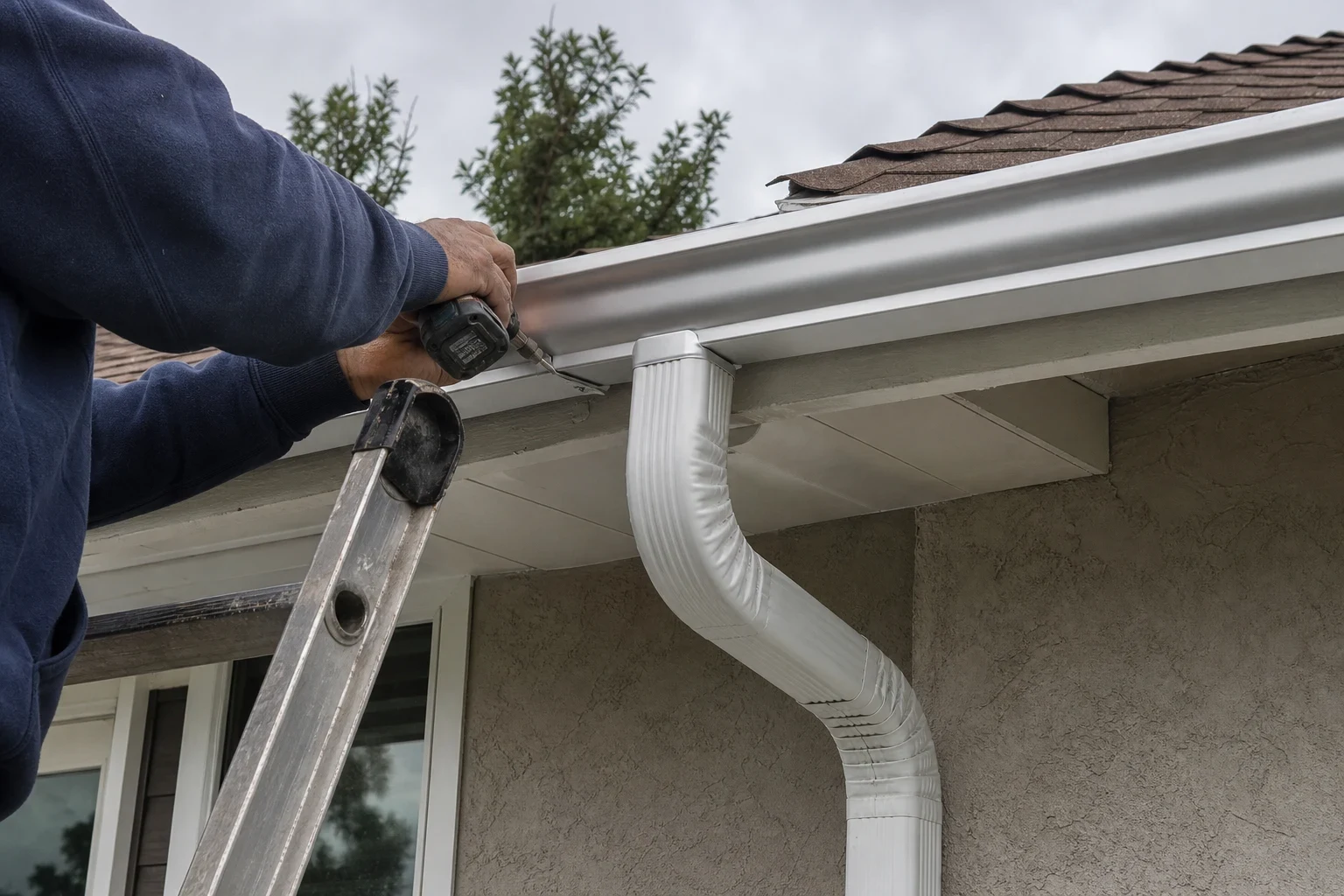
We install and repair one-piece aluminum gutters and downspouts that move water off your roof and away from your foundation. Each run gets the right size, a measured slope and hangers fastened into sound wood, so it works when the first real storm of winter arrives.
What Gutters Do and When to Replace Them
A gutter collects the water that sheds off your roof edge and sends it to a downspout, which carries it a few feet away from the house. When that chain breaks, water spills over the fascia, soaks the soil beside the slab or crawlspace, splashes back onto stucco and finds its way under the drip edge into the roof deck.
Nearly every gutter failure we see traces back to one of three things. The profile is too narrow for the amount of roof shedding into it, the fall is flat or runs backward so water pools, or the hangers have backed out of fascia gone soft with rot. A dry summer hides all of them. We check while the weather is calm, because repairs are easier to plan before the rain than during it.
Sometimes a re-pitch, new hangers and resealed miters are enough. If the runs are dented, the seams leak at every joint or the fascia behind them is rotted, replacement is the better value, and we will tell you which one your home needs.
What Our Gutter Work Includes
- 01
Continuous aluminum runs
We form each run to the length of the wall, so the only joints are at corners and downspout outlets. Fewer seams means fewer places for sealant to fail and drip.
- 02
Sizing for your roof
Every run is matched to the roof plane that empties into it. We take the square footage and slope of that plane, then choose a 5-inch or 6-inch K-style profile. Large or steep planes often call for the 6-inch gutter with 3x4 downspouts so a heavy burst does not overtop the front lip.
- 03
Slope and hanger spacing
Runs are set with a steady fall toward the outlet, roughly a quarter inch every ten feet. Hidden hangers go in about every two feet and screw into the rafter tails or solid fascia, not just the trim board.
- 04
Fascia and drip edge check
Before new gutters go up, we probe the fascia for rot and confirm the drip edge laps into the gutter. Water that runs behind a gutter is usually a missing or short drip edge.
- 05
Downspouts and discharge
We place downspouts where the water has somewhere to go. Then we fit extensions or concrete splash pads that move the flow out past the foundation, walkways and garage slab.
- 06
Repairs and resealing
For gutters with life left, we reset sagging sections, replace loose hangers, reseal end caps and miters, and clear clogged outlets.
Questions about Gutters?
Call(310) 896-4936When Your Gutters Need a Look
Overflow at the front lip
If water spills over in an ordinary rain, the outlet may be clogged, the gutter too small or the run pitched backward.
Runs that sag or pull loose
A run that dips between hangers collects water in the low spot. That water weighs a lot, and each storm loosens the fasteners a bit more.
Dripping at seams and corners
Sectional gutters leak once the old sealant dries and cracks. The steady drip streaks the stucco and soaks the ground beneath.
Fascia that is stained or soft
Dark streaks, flaking paint or wood that gives under your thumb mean water is running behind the gutter. That damage usually grows over several wet seasons before anyone sees it.
Washed-out soil by the foundation
Little channels in the beds or puddles along the slab show where a downspout lets out too close to the house.
How a Gutter Job Runs
- 1
Free inspection
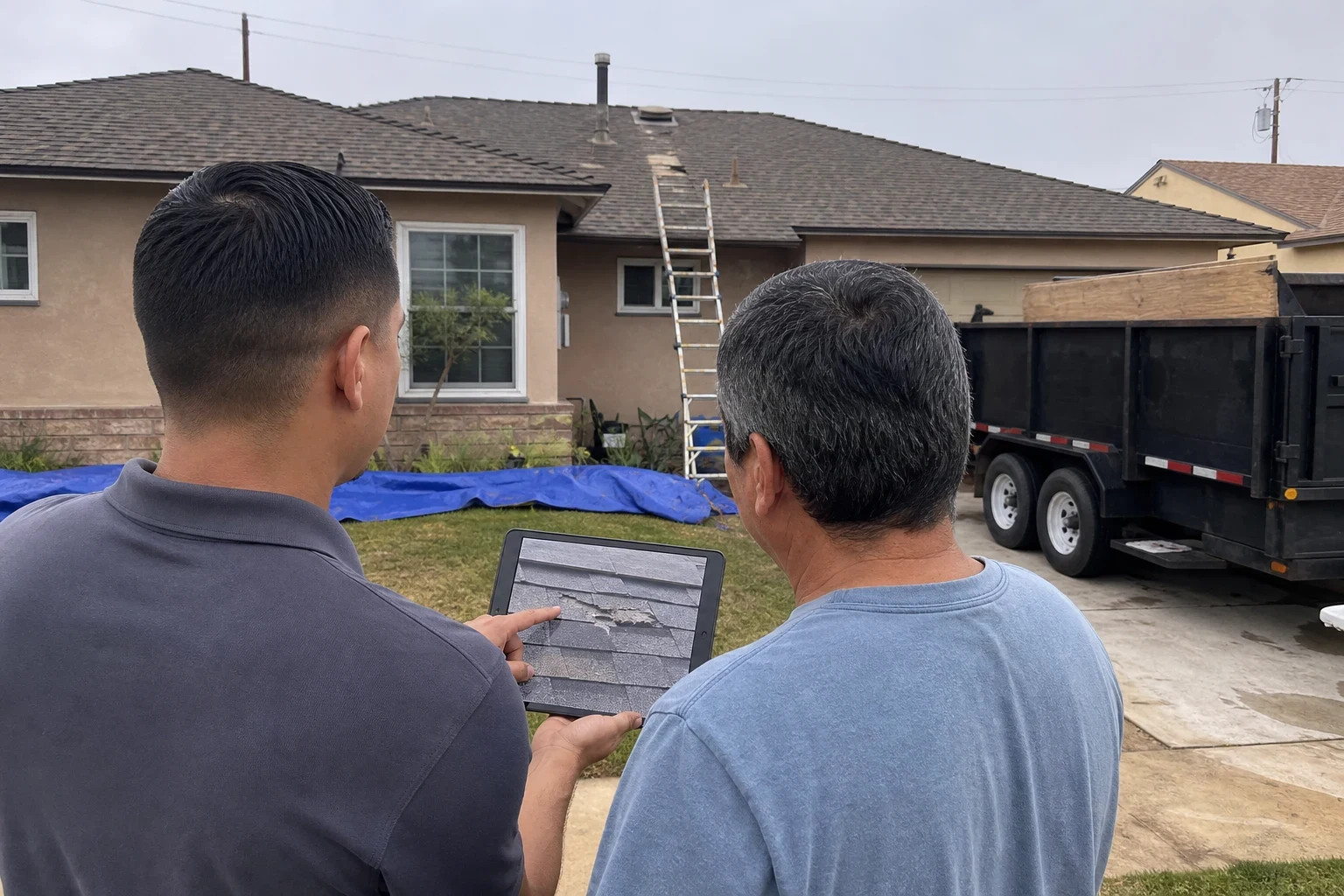
We walk the eaves, check slope with a level, look at the fascia and drip edge, and note where each downspout drains. We also look at the roof edge, since gutter trouble often starts there.
- 2
Free written estimate
You get a written estimate listing footage, gutter size, downspout count and any fascia repair, so you can see what each part of the job covers.
- 3
Removal and prep
On install day we take down old gutters, replace rotted fascia where we found it, and confirm the drip edge sits over the back of the new gutter.
- 4
Install and test
We hang the new runs, seal miters and end caps, attach downspouts and extensions, then run water through each section to confirm it drains to the outlet.
- 5
Cleanup
Old gutters, screws and cut-offs are hauled away, and we sweep the walkways and beds before we leave.
What Drives Gutter Pricing
Most of a gutter price comes down to how much material goes up and how hard the eaves are to reach. Rotted wood behind the gutter is the add-on we see most, and we spot it at the inspection so it shows up on the estimate rather than mid-job. Financing is available through Service Finance Company, subject to credit approval.
- Total length and corners
- The footage sets the starting point, and each inside or outside miter adds labor and sealing.
- Size of gutters and downspouts
- Six-inch gutters with 3x4 downspouts take more aluminum than 5-inch with 2x3, and they carry water from bigger roof areas.
- Reach and access
- Second-story eaves, steep pitches and tight side passages mean more ladder setup and slower, careful work.
- State of the fascia
- New hangers need solid wood, so rotted fascia boards are replaced first and priced per board.
- Tear-down and add-ons
- Removing old gutters, adding gutter guards or running underground-style extensions all change what the job includes.
Common Gutter Questions
What is the best time to book gutter work?
Late summer or early fall. Most of our rain comes from November through March, and fall Santa Ana winds blow leaves and grit into the outlets right before it begins. Doing the work first means your gutters are clear and tested before the first storm.
We get so little rain. Are gutters worth it?
Yes, since our rain tends to arrive in short, heavy bursts. With no gutters, it pours off the edge in a line, washes out the soil and splashes up onto stucco and wood trim. Gutters also keep water off the fascia and the edge of the roof deck.
Do gutters work on a tile roof?
Yes. The gutter has to sit where the tile overhang empties into it, and the hangers must go on without disturbing the tile or the underlayment below. We take care with that fit, and our tile roofing work uses the same edge details.
Do I need 5-inch or 6-inch gutters?
It depends on how much roof area drains into each run and how steep it is. A single-story home with gentle slopes usually does fine with 5-inch. Large or steep planes, or a valley dumping into one spot, need 6-inch. We measure and explain the choice on your estimate.
Does insurance cover gutter damage?
Damage from a storm or a falling limb may be covered by your policy. We work directly with your insurance claim, photograph the damage and explain what we found, and the adjuster decides coverage. Our storm damage repair page goes into that process.
Get Your Gutters Ready Before the Rain
We will check your gutters, fascia and roof edge, then give you a free written estimate with the size, footage and repairs spelled out.