ServicesRoof Inspections
Roof Inspections in Carson, Read Part by Part Before the Rains
We walk your roof and check the parts that fail first: flashing at walls and chimneys, pipe boots, valleys, ridge caps and drainage. You get photos, a plain explanation of what each finding means, and enough lead time to fix small problems before the wet months arrive.
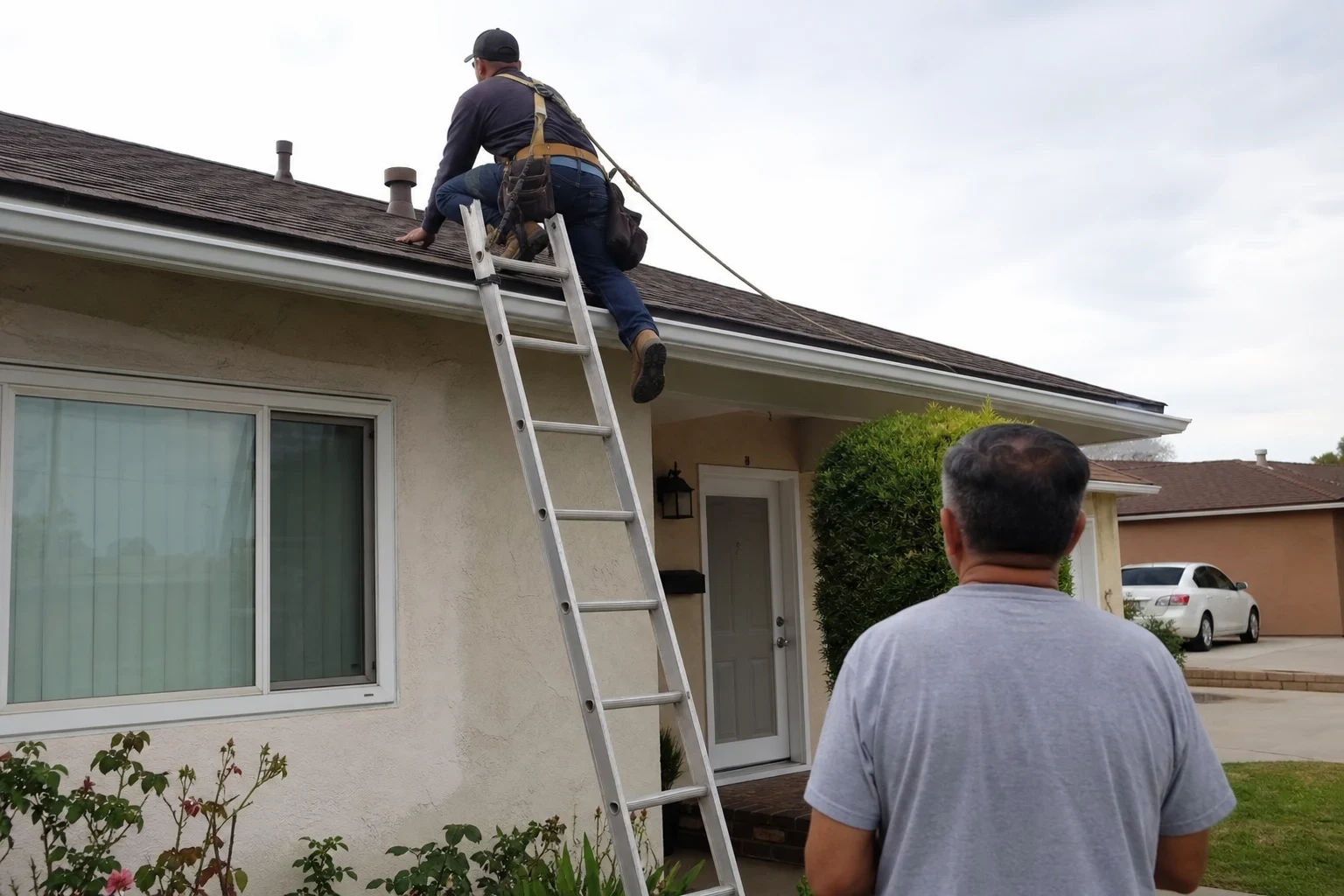
What a Roof Inspection Tells You, and When to Get One
Most roof leaks start small and out of sight. A rubber pipe boot cracks after years of sun, a nail backs out and lifts a shingle tab, or mortar at a ridge cap loosens and lets water track under the tile. None of it shows from the driveway, and all of it is cheaper to fix while the roof is dry.
That is why we suggest an inspection in late summer or early fall. Around Carson, the dry months bake asphalt shingles and the rubber parts of a roof, and the first real storms usually arrive late in the fall. Checking your roof in that window leaves time for any roof repair to be done before rain tests it.
A few other moments call for one too. Escrow is a good time, for buyers and sellers alike, since it settles roof questions while the deal is still open. So is the week after heavy wind, the point where a roof reaches roughly 15 years old, or any time its history is a mystery. Ours is free, and if your roof needs nothing, we will tell you that plainly.
What We Check on Every Inspection
- The roof covering
- On asphalt shingles we look for granule loss, curling, cracked tabs and broken seal strips. On tile we look for cracked, slipped or missing pieces and loose mortar at ridges and hips. On flat sections we check for blisters, open seams and the dried rings that mark ponding water.
- Flashing and penetrations
- Step flashing along walls, counterflashing, chimney and skylight flashing, and the boots around plumbing vents. These metal and rubber details are where most leaks begin, because sealant dries out and rubber cracks long before the main field of the roof wears out.
- Clues about the decking and underlayment
- We cannot see underlayment on a finished roof, but soft spots underfoot, sagging between rafters and stained eaves tell us when water has reached the wood. On tile roofs, the felt underneath usually wears out well before the tile does.
- Attic and ventilation
- From the attic we look for daylight at nail holes, stains on the sheathing, damp insulation and blocked soffit vents. Poor airflow cooks shingles from below and shortens their life.
- Gutters and drainage
- We check for clogged gutters, loose hangers, debris packed in valleys and downspouts that empty against the foundation. Water that cannot leave the roof finds another way in, so drainage problems often get handled alongside our Gutters work.
- Photos and written findings
- Each issue is photographed and noted by location, with its likely cause and how urgent it is. If work is needed, you get a free written estimate with each repair listed on its own line.
Signs Your Roof Is Due for an Inspection
Stains on a ceiling or wall
A brown ring on drywall, even an old one, means water got through at some point. We find out whether that path is still open.
Granules piling up in gutters
New shingles shed a few granules. Heavy buildup at the downspouts means the asphalt underneath is losing its UV shield and aging fast.
Cracked or slipped tiles
Tile sheds most of the water, but the felt beneath it does the final waterproofing. A broken or shifted tile leaves that felt exposed to sun, and it breaks down quickly.
A strong windstorm just passed
Santa Ana winds can lift shingle tabs, break their seal and loosen ridge caps. That kind of damage often stays hidden until the next rain finds it.
You do not know the roof's history
If you are unsure how old the roof is or who last worked on it, an inspection gives you a baseline to plan from.
How Inspection Day Goes
- 1
Set a time by phone
Tell us the roof type, its rough age and anything you have noticed inside or out. We set a visit and answer your questions in English or Spanish.
- 2
Ground check, then the roof
We start at ground level, looking at roof lines, fascia and gutters, then go up where it is safe to walk. On tile we step on the lower part of each piece, where it rests on the tile below, to avoid cracking what we came to check.
- 3
Attic check
If there is attic access, we look at the underside of the decking for stains, light and moisture, and confirm the intake and exhaust vents are open.
- 4
A sit-down over the photos
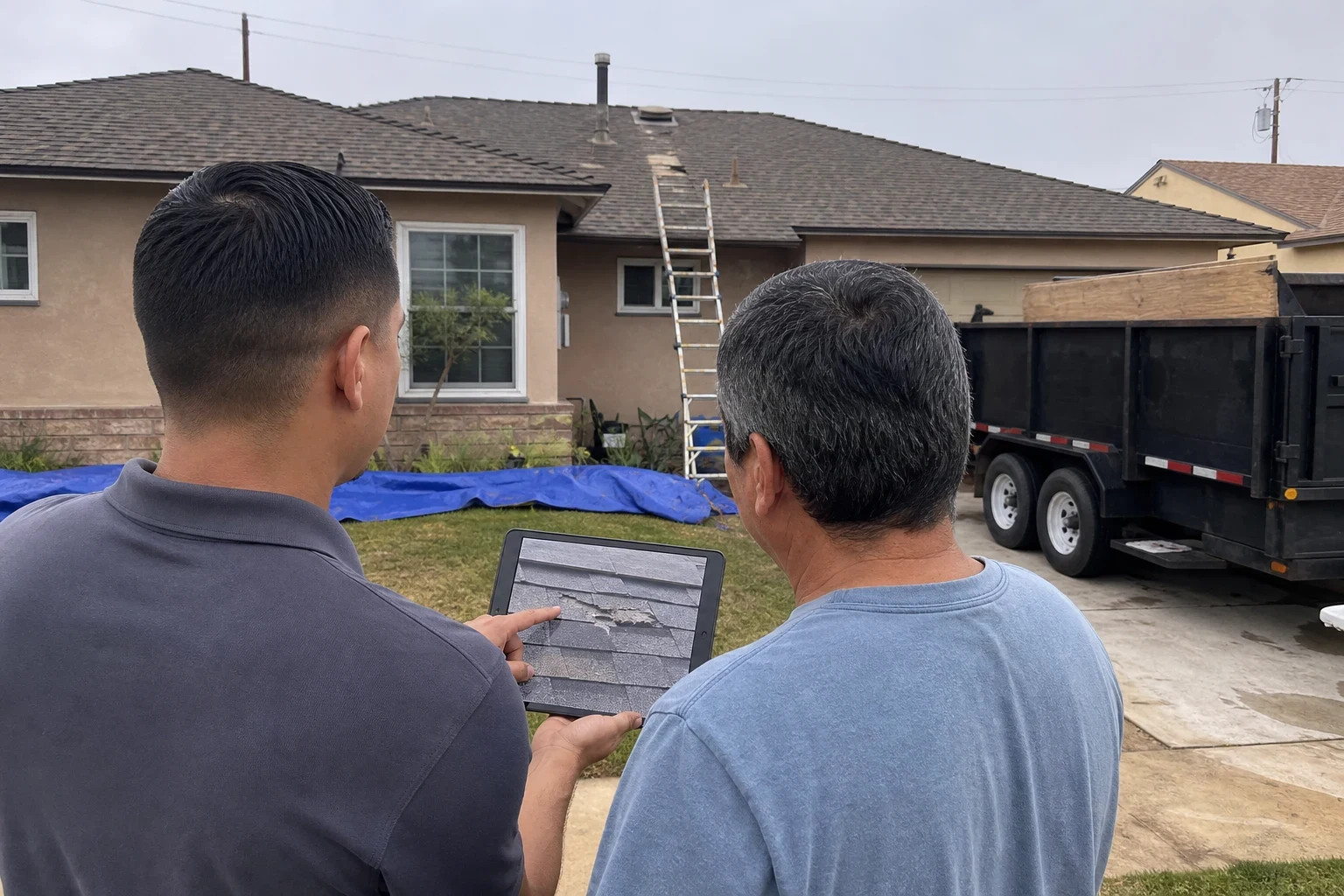
While we are still at your home, we show you each picture and name the part in it, the cause of the wear, and whether it belongs on the list for this fall or can ride out another season. A roof with nothing wrong gets that answer too.
- 5
A written estimate when it makes sense
When repairs are worth doing, you get a free written estimate. Financing is available through Service Finance Company, subject to credit approval, and when storm damage is involved we work directly with your insurance claim.
The Inspection Is Free. Here Is What Moves Repair Costs
There is no charge for the inspection itself. Any cost comes from work it turns up, and the written estimate shows what drives each line. Knowing these factors ahead of time makes our findings easier to weigh.
- Roof material
- Repairing tile often means lifting and resetting pieces to reach the underlayment, which takes more labor than swapping a few shingles. Flat roofs use their own membranes and seam methods.
- What is underneath
- Replacing a pipe boot is a small job when the decking around it is solid. If water has softened the plywood, that section has to be cut out and replaced first.
- Pitch and access
- Steep slopes, second stories and narrow side yards call for more safety setup and slower, more careful work.
- Timing
- A worn boot fixed in September is a quick repair. The same boot left until it leaks into drywall in January becomes a bigger job inside and out.
Roof Inspection Questions
Something not covered here? (310) 896-4936
How long does an inspection take?
Most single-family roofs take about an hour, a little longer for a large tile roof or several flat sections. You do not need to go up with us. We do ask to see the attic and to walk you through the findings at the end.
Will you try to sell me a new roof?
No. Most roofs we look at need a repair or nothing at all. If a roof has truly reached the end of its life, we show you the photos that led us there and explain why patching would not hold. Roof replacement is one option, and the decision is yours.
How often should my roof be inspected?
Every year or two is a sensible rhythm, ideally in late summer or early fall before the wet season. Add a visit after a major windstorm and before buying a house.
Can an inspection help with an insurance claim?
Yes. Our photos and notes record the damage, where it is and its likely cause. We work directly with your insurance claim and can walk the adjuster through what we found, though the insurer makes the coverage decision. Our Storm Damage Repair page covers the next steps.
My roof is clay tile. Can you check it without cracking pieces?
Yes. Our feet go only on the overlap, where each tile sits on the course below and has support. Clay and concrete get brittle with age, so before we climb we note and photograph any piece that is already broken. If a tile does give way during the visit, we tell you and show you which one.
Get Your Roof Checked Before the Wet Season
A dry-month inspection gives you time to fix small problems on your own schedule. We serve Carson and nearby towns including Torrance, Gardena and Long Beach.