ServicesAsphalt Shingle Roofing
Asphalt Shingle Roofing in Carson
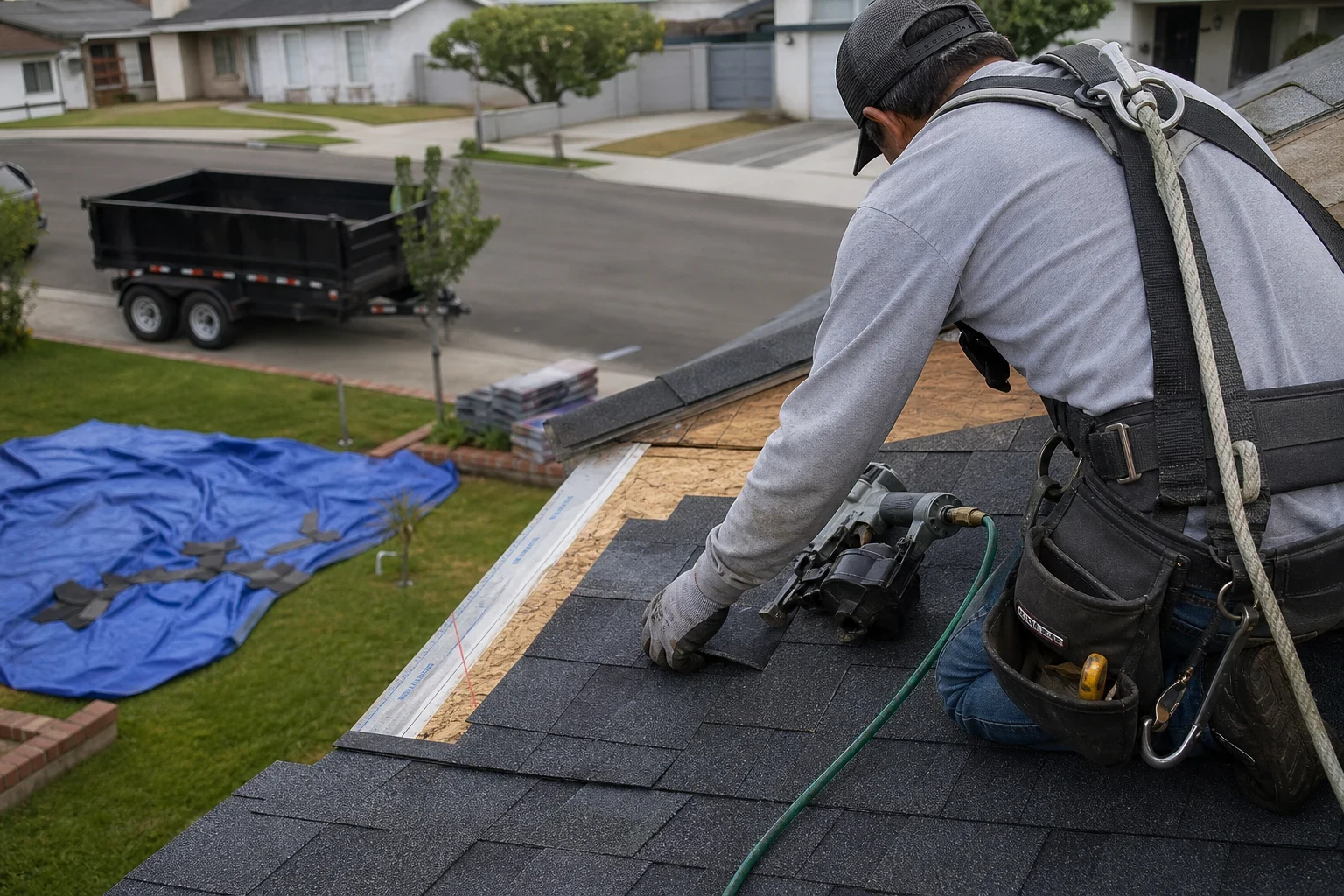
We install and repair asphalt shingle roofs as a complete system: decking, underlayment, flashing, ventilation and shingles nailed to the manufacturer's pattern. We plan most shingle work for the dry months, so your home goes into the rainy season with a roof that sheds water from the first storm.
What a shingle roof has to do
An asphalt shingle is a fiberglass mat coated in asphalt and topped with ceramic-coated granules. The granules block UV light, and the asphalt keeps water out. Year after year of strong sun dries the asphalt, the granules wash into your gutters and the shingle turns brittle. Most shingle roofs age this way, from the top surface down, long before a stain shows on a ceiling.
We handle new shingle roofs, partial replacements and repairs to flashing, pipe boots and vents. If part of your roof is tile or a low-slope section over a patio, our tile roofing and flat roofing pages cover that work. Not every tired roof needs replacing. When a repair will carry it through a few more winters, we tell you so.
Timing matters with shingles. The sealant strips bond best in warm weather, and a tear-off is safest when rain is weeks away. That makes late summer and early fall the best window for shingle work in the Carson area, ahead of the November-to-March rains.
What goes into a shingle roof we install
- Tear-off and deck check
- We remove old shingles and felt down to the sheathing so we can see the wood. Soft or delaminated plywood gets replaced. Some older homes were built with spaced boards meant for wood shakes, and shingles need a solid deck, so we sheet over those boards first.
- Underlayment and sealed valleys
- Synthetic underlayment covers the field of the roof. In valleys, around chimneys and at pipe penetrations we add self-adhered membrane that seals around each nail, because those are the spots where water collects and runs sideways.
- Drip edge, starter and nailing
- Metal drip edge at the eaves and rakes keeps water off the fascia boards. A starter strip gives the first course a sealed edge so wind can't get underneath. Every shingle is nailed in the manufacturer's nail zone, which is what its wind rating depends on.
- New flashing and pipe boots
- We replace step flashing along walls and the rubber pipe boots that crack in the sun. Reusing old flashing under new shingles is one of the most common causes of early leaks.
- Attic ventilation
- Ridge vents and enough intake at the eaves let hot air leave the attic. A cooler roof deck slows the drying of the asphalt, so the shingles keep their flexibility longer.
- Daily cleanup
- Tarps go over plants and walkways, debris goes straight into the bin, and we run a magnetic sweeper over the driveway and yard for nails before we leave.
Signs your shingle roof needs attention
Granules in the gutters
Dark grit piling up in gutters or at downspout outlets means the protective layer is wearing off. Once the asphalt is exposed, UV breaks it down quickly.
Curled or cupped shingles
Lifting edges or sunken centers show the shingle has lost its oils. Curled tabs catch wind and snap off.
Missing tabs after wind
Dry Santa Ana winds in the fall can unseal brittle shingles and tear tabs away. A missing tab leaves the nail holes in the course below open to the next rain.
Cracked boots or rusted flashing
Split rubber around plumbing vents and rusted step flashing at walls let water in even when the shingles look fine.
Stains inside
Water marks on drywall, or dark rings on the underside of the plywood when you look in the attic, mean water already got past the roof. Our roof leak repair page covers tracking it to the source.
Shingles that crack when bent
A shingle that breaks instead of flexing has dried out. Brittle roofs don't take repairs well, because lifting one shingle cracks its neighbors.
How a shingle job runs
- 1
Free inspection and written estimate
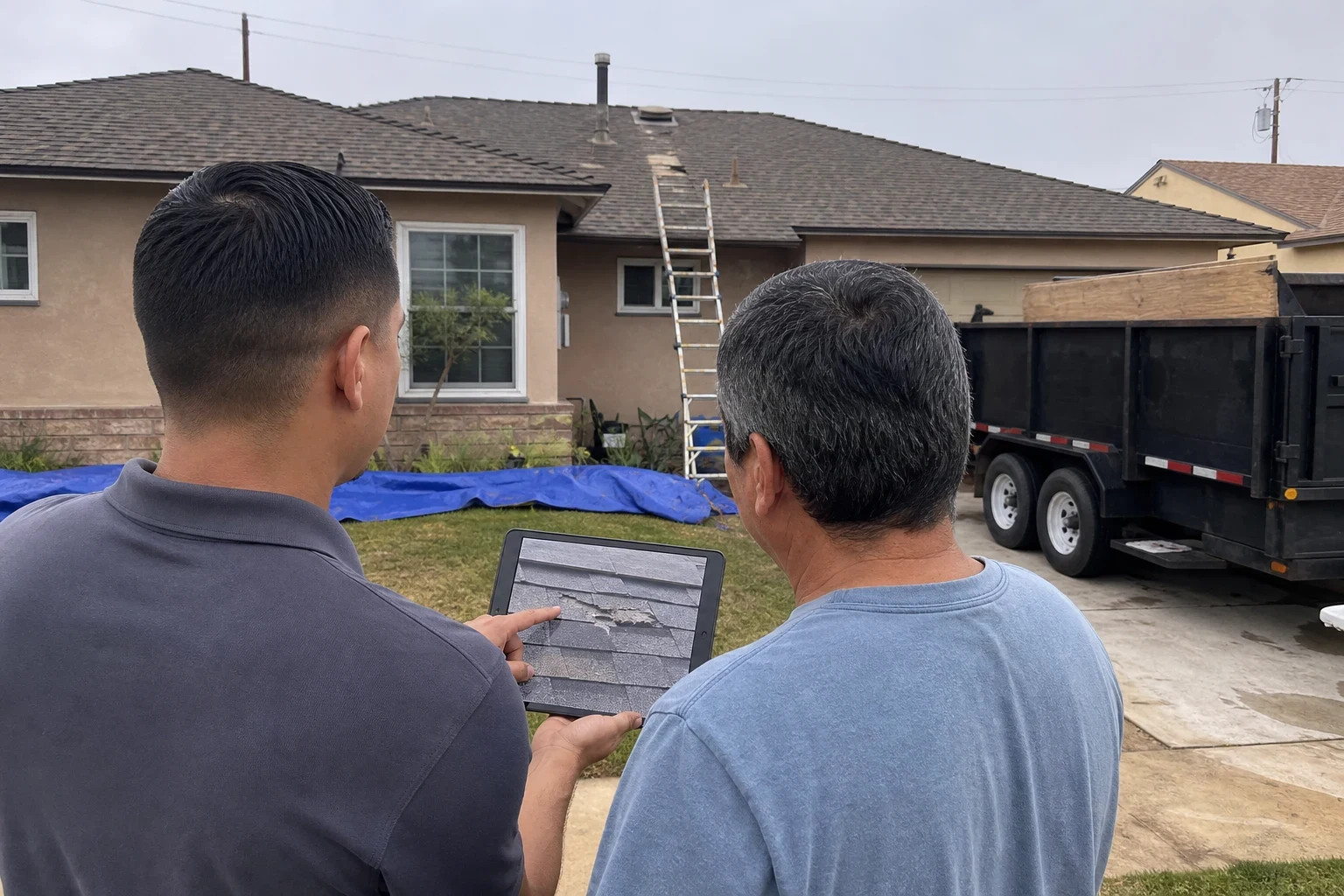
We walk the roof, check the attic and photograph the deck, flashing, boots and vents. You get a free written estimate that lists the materials and each part of the work. We serve you in English or Spanish.
- 2
Permit and dates set against the forecast
We pull the city permit and choose start dates around dry stretches, so your deck is never left open with rain on the way.
- 3
Tear-off and dry-in
The crew strips one section at a time, repairs the deck and covers it with underlayment the same day. Your home is dried in before anyone leaves.
- 4
Shingles, flashing and ridge
Starter, field shingles, flashing, vents and ridge cap go on in order. Warm afternoons activate the sealant strips so the tabs bond down against wind.
- 5
Inspection and walkthrough
The city inspector signs off where required. We do a final nail sweep, then walk the finished roof with you and hand over the photos.
What moves the price of a shingle roof
Each shingle roof is priced from its own measurements and the condition of the deck under it, so two houses on the same block can land in very different places. Your written estimate breaks the job into line items, and you can see exactly which part of the work each one pays for. Financing is available through Service Finance Company, subject to credit approval.
- Roof area and slope
- We figure material by the total surface of every roof plane, which is larger than your home's floor plan once overhangs and slope are counted. A steep slope takes longer to work safely and needs extra fall protection, so labor climbs with the angle.
- Old layers and decking
- Two layers of old shingles mean more tear-off and disposal. Spaced boards or rotted plywood add new sheathing.
- Shingle line
- Architectural laminated shingles cost more than 3-tab but carry higher wind ratings and longer rated lives. Cool-rated colors are another option, and the energy code calls for them on some reroofs.
- Roof details
- Chimneys, skylights, valleys and wall intersections each need their own flashing and labor. Adding ventilation adds material.
- When you schedule
- Booking in the dry months gives you more choice of start dates. Work pushed into the rainy season waits out storms, which stretches the schedule.
Shingle roofing questions we hear
Something not covered here? (310) 896-4936
How long will an asphalt shingle roof last?
It depends on the shingle line and how well the attic breathes. Architectural shingles generally outlast 3-tab, and strong sun with poor ventilation shortens the life of either. At the inspection we check granule loss, brittleness and the sealant bond, and tell you where your roof stands.
Can you put new shingles over my old ones?
Code allows a second layer in some cases, but we usually recommend a tear-off. An overlay hides the deck, holds more heat and keeps the old flashing in place. Stripping to the wood is the only way to find soft spots and fix them.
Should I choose shingles or tile?
Shingles weigh far less, cost less to install and are simpler to repair. Tile lasts longer but needs framing built to carry it. Our tile roofing page covers that side, and we can compare both on your roof during the inspection.
Do I need to leave home during the work?
No. Most shingle roofs on a single-family house take a few working days, and you can stay inside. Expect noise during tear-off. We cover plants and keep your driveway usable where we can.
Will insurance pay for a new shingle roof?
If wind or a fallen limb caused the damage, it may. We work directly with your insurance claim by photographing the damage and meeting the adjuster, but the adjuster decides coverage. Normal aging usually isn't covered. Our storm damage repair page explains more.
What is the best time of year for shingle work?
Late summer through fall, before the rains, with spring a close second. We can work in winter between storms, but start dates move more often.
Get your shingle roof ready before the rain
We'll inspect your roof, look in the attic and show you the photos, then give you a free written estimate. Hablamos español.